Commercial Air Duct Cleaning in Littleton, CO
Duct cleaning for offices, retail, restaurants, schools, and medical buildings in Littleton, Colorado — phased so the building stays open, usually scheduled outside business hours, with before-and-after camera proof.
- Air duct, dryer vent, furnace, commercial, coil & duct repair
- Littleton, Centennial, Englewood & nearby areas
- Assessment first, then a clear plan
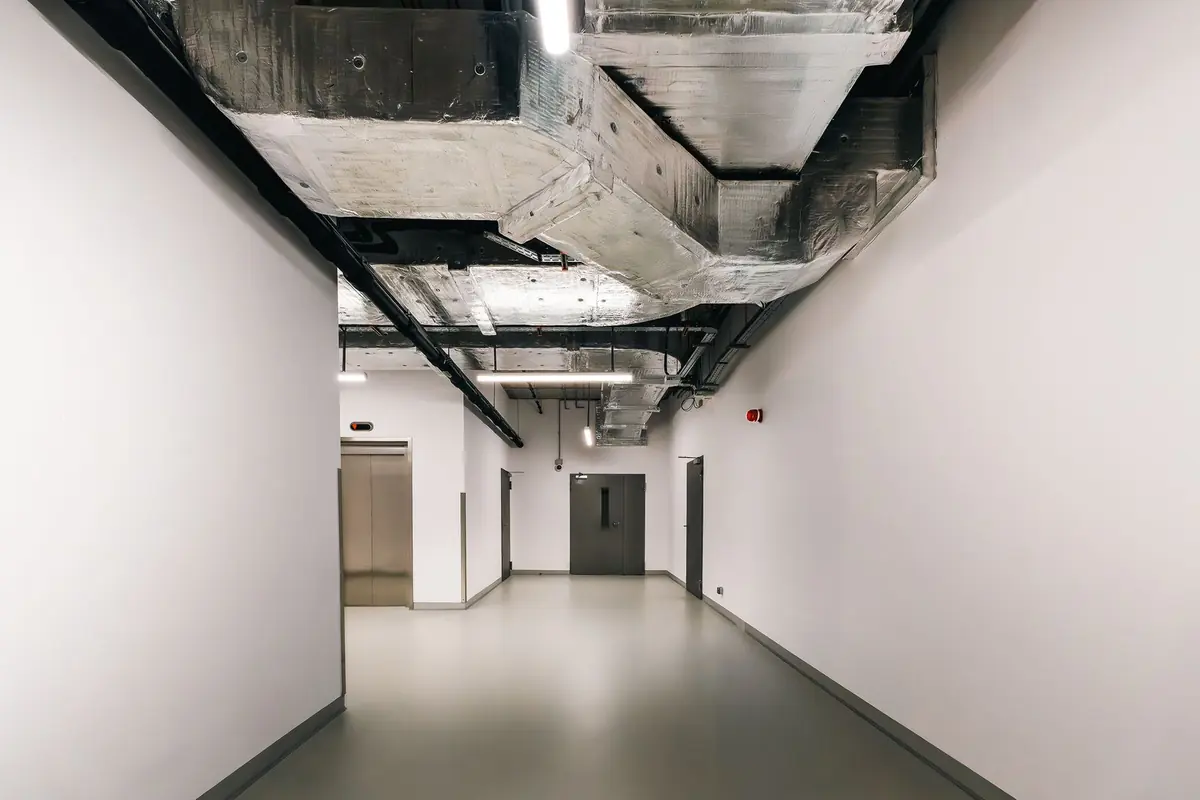
What this page covers: Commercial air duct cleaning in Littleton, CO — whole-system duct cleaning for offices, retail, restaurants, schools, and medical buildings, phased so the building stays open, usually scheduled outside business hours, with before-and-after camera proof.
Published 2026-11-14 · Last updated 2026-11-14
What is commercial air duct cleaning in Littleton, CO?
Commercial air duct cleaning is whole-system cleaning of the ductwork in a non-residential building — supply and return ducts, trunk lines, registers, coils, and the air handler — done under negative air with camera proof. The method is the same as residential cleaning; the scale, the scheduling, and the access are different.
The ductwork in a commercial building is the residential system at a larger scale: bigger trunk lines, more zones, longer runs, and rooftop units instead of a furnace in a closet. The same test applies as for a home — inspection first, whole-system cleaning under negative air, and proof of the work. What changes is the logistics: a building cannot simply be closed for a day, so the work is phased and usually scheduled outside business hours.
Which buildings need commercial duct cleaning?
Offices, retail stores, restaurants, schools, medical and dental offices, gyms, hotels, and multi-unit residential buildings. Any building with a ducted HVAC system and people inside it all day can benefit — especially after construction, a remodel, or years without a cleaning, when an inspection shows buildup worth removing.
| Building type | What differs |
|---|---|
| Offices | Multiple zones and long runs; work phased floor by floor so the office stays open |
| Retail and restaurants | Grease and cooking residue near kitchen exhausts; cleaning usually outside opening hours |
| Schools | Large air handlers and long trunk lines; cleaning usually scheduled in breaks or after hours |
| Medical and dental offices | Cleaner air matters most here; cleaning is phased so treatment rooms stay in use |
| Multi-unit residential | Shared trunk lines with unit branches; common areas and individual units are separate scopes |
Construction and renovation dust is the most common trigger for a commercial cleaning — drywall dust settles inside ductwork during a build-out, and the first months of use push it into the rooms. A building that has never been cleaned, or one with a smoker tenant, a pest problem, or visible mold, is the same test: an inspection first, then cleaning only if the inspection shows buildup worth removing.
How is commercial cleaning different from residential cleaning?
Scale, access, and scheduling. A commercial system has larger trunk lines, more zones, rooftop units, and longer runs, and the work is usually phased — one zone at a time — so the building stays open. Cleaning is usually scheduled outside business hours, and the proposal is agreed in writing before work starts.
A home has one system and a handful of vents. A commercial building has several systems, each with its own zones, dampers, and access points — and the ductwork often runs through ceilings, shafts, and mechanical rooms that need a ladder or a lift to reach. The cleaning method does not change: inspection, negative air, agitation vent by vent, and camera proof. The planning around it does: which zones first, which hours, and what stays running while the work happens.
What are rooftop units, and why do they matter?
A rooftop unit, or RTU, is a packaged heating and cooling unit that sits on the roof of a commercial building, with the ductwork running down into the space below. Rooftop units collect dust, leaves, and debris, and their coils and drain pans need the same inspection and cleaning as any indoor system.
Many commercial buildings in Littleton run on rooftop units rather than a furnace in a closet. An RTU is a self-contained box — fan, coils, filters, and drain pan in one unit — and it is exposed to the weather, so its coils clog with dust, leaves, and pollen, and its drain pan can hold standing water. A commercial cleaning that ignores the rooftop units leaves the dirtiest part of the system untouched. The AC coil cleaning page covers coils in detail.
How does phased cleaning work?
Phased cleaning divides the building into zones — one floor, wing, or system at a time — and cleans each zone while the rest of the building stays in use. Each zone is inspected, cleaned under negative air, and verified with camera footage before the crew moves to the next zone.
- Walkthrough and proposalA walkthrough of the building first: how many systems, how many zones, where the access points are, and what the inspection shows. The scope, the phasing, and the schedule are agreed in writing before work starts.
- Zone by zoneOne floor, wing, or system at a time. The zone being cleaned is isolated so dust does not travel into the zones still in use.
- Negative air and agitationA high-powered vacuum connects to the trunk lines of the zone and holds it under negative pressure, while compressed-air and rotating-brush tools break debris loose vent by vent.
- Coils, blower, and air handlerThe blower, the air handler, and the coils are cleaned as part of the job, so a dirty air handler does not re-contaminate clean ducts.
- Verify and documentBefore-and-after camera footage for each zone is the record of the work, and access plates cut for the vacuum are sealed after the job.
Phasing is also how a multi-tenant medical building keeps its clinics open during the week: one wing at a time, outside clinic hours, with the rest of the building running normally. That is the model to ask for — not a promise about any specific building, but the way a competent commercial job is organised.
What does commercial cleaning include?
Supply and return ducts, trunk lines, registers and returns, the blower and air handler, the coils, and the furnace or rooftop unit — the whole system, not just the duct runs. Access plates cut for the vacuum are sealed after the job, and before-and-after camera footage is the record of the work.
- Supply and return ducts, trunk lines, and registers — the full duct network, zone by zone
- Blower and air handler — the fan and the unit that moves air through the building
- Evaporator and condenser coils — cleaned as part of the job; see the AC coil cleaning page
- Rooftop units — coils, drain pans, and filters inspected and cleaned
- Furnace or boiler air side, where the building has one
- Access plates — cut for the vacuum where needed, sealed after the job
- Camera proof — before-and-after footage of the inside of the ducts, zone by zone
When is commercial cleaning warranted?
The same EPA test as residential cleaning: substantial visible mold in hard-surface ducts, vermin infestation, or ducts clogged with excessive dust and debris. Construction dust, a remodel, a smoker tenant, or years without cleaning are the usual triggers — and an inspection, not a calendar, decides.
The EPA position does not change for a commercial building: the EPA does not recommend routine cleaning, only as needed, and cleaning has never been shown to actually prevent health problems. What cleaning does, when it is warranted, is remove accumulated dust, debris, and contamination from the duct system. A building with a recent build-out, a renovation, or a long gap since the last cleaning is the usual case — and the inspection is what decides, not a maintenance calendar.
Does commercial cleaning include mold removal or sanitizing?
Cleaning removes debris; mold removal is separate work. If an inspection finds substantial visible mold, the moisture source must be fixed first, and remediation is a separate job with its own scope. Sanitizing is an antimicrobial treatment applied after mechanical cleaning, only with a reason — it never replaces cleaning.
Mold in a commercial building is a boundary question. Substantial visible mold on hard-surface ducts is one of the three EPA-warranted cases for cleaning — but mold growth is a moisture problem first: a leaking drain pan, condensation on ductwork, or a damp mechanical room. Cleaning the mold without fixing the moisture is a repeat job. Sanitizing — an antimicrobial treatment applied after mechanical cleaning — is a separate step with a reason, such as smoke smell or microbial growth at a corrected source. Fogging alone is not cleaning.
What should a business ask before hiring?
Ask what is included — ducts, coils, blower, air handler, or only the duct runs — whether work is phased, when it is scheduled, and what proof is provided. Ask about compliance questions for the building type, and get the scope and the schedule in writing before work starts.
The five questions that protect a business are the same ones that protect a homeowner, with two additions. What is included, and what is an extra? Is the work phased, and which zones first? When is it scheduled — and will the building stay open? What proof of the work is provided? And for workplaces, what compliance documentation applies to the building type — a question to ask the provider, since this site does not claim any provider meets a specific standard. The residential version of the same checklist is on the air duct cleaning page.
Frequently asked questions — commercial air duct cleaning
Do you clean commercial buildings in Littleton?
Yes — offices, retail stores, restaurants, schools, medical and dental offices, gyms, hotels, and multi-unit residential buildings. Any building with a ducted HVAC system and people inside it all day can be cleaned, and the same inspection-first method applies: cleaning only when an inspection shows buildup worth removing.
Can a commercial cleaning be done without closing the building?
Usually yes. The work is phased — one floor, wing, or system at a time — so the rest of the building stays in use, and cleaning is usually scheduled outside business hours. The phasing and the schedule are agreed in writing before work starts.
Do you clean rooftop units?
Yes. A rooftop unit, or RTU, is a packaged heating and cooling unit on the roof, and its coils, drain pan, and ductwork are inspected and cleaned as part of a commercial job. Rooftop units collect dust, leaves, and debris, so they are part of the inspection, not an afterthought.
What is included — just the ducts, or the whole system?
The whole system: supply and return ducts, trunk lines, registers and returns, the blower and air handler, the coils, and the furnace or rooftop unit. Access plates cut for the vacuum are sealed after the job, and before-and-after camera footage is the record of the work.
Does commercial cleaning include mold removal?
No — cleaning removes debris, and mold removal is separate work. If an inspection finds substantial visible mold, the moisture source must be fixed first, and remediation is a separate job with its own scope. Sanitizing is an antimicrobial treatment applied after mechanical cleaning, only with a reason.
How is a commercial cleaning scheduled?
Call and describe the building type, the number of floors or systems, and what was noticed. A local provider walks through the building, explains what was found, and agrees the scope, the phasing, and the schedule in writing before work starts. There is no price printed anywhere on this site.
For homes, see air duct cleaning and furnace cleaning. For coils, see AC coil cleaning, and for leaks and damage, duct repair and sealing. General questions are on the FAQ page.
Start With an Assessment
Call and describe what was noticed, where it was noticed, and when it was first noticed. A local provider assesses first, then lays out the next steps clearly — no guesswork, no pressure.