Duct Repair and Sealing in Littleton, CO
Repair and sealing of leaking, disconnected, crushed, and damaged ductwork in Littleton, Colorado — inspection first, then repair, then sealing, with airflow verified after the work.
- Air duct, dryer vent, furnace, commercial, coil & duct repair
- Littleton, Centennial, Englewood & nearby areas
- Assessment first, then a clear plan
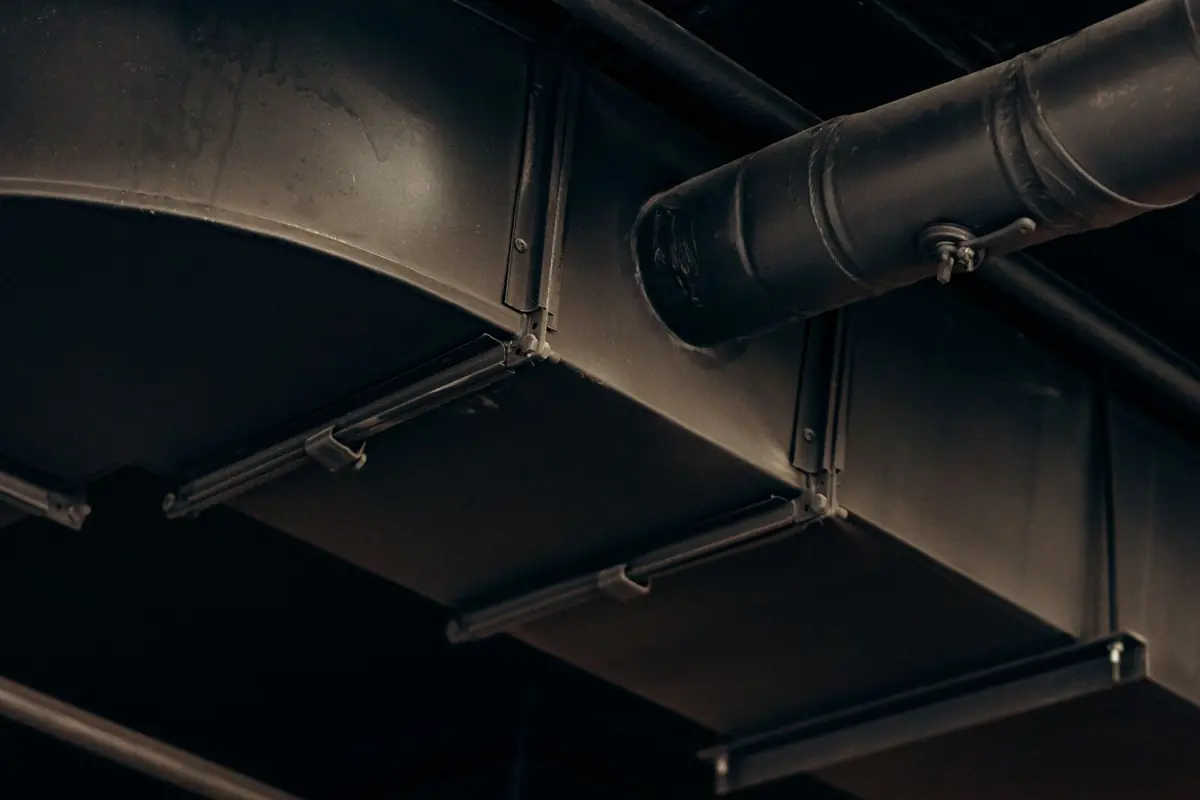
What this page covers: Duct repair and sealing in Littleton, CO — repair of leaking, disconnected, crushed, and damaged ductwork, and sealing of joints and seams with mastic, so conditioned air reaches the rooms instead of escaping into the attic or crawlspace. Repair comes before cleaning.
Published 2026-11-14 · Last updated 2026-11-14
What is duct repair and sealing in Littleton, CO?
Duct repair fixes damaged ductwork — disconnected joints, crushed or kinked sections, torn flex duct, and damaged ductboard. Duct sealing closes the leaks at joints and seams, usually with mastic, so conditioned air reaches the rooms instead of escaping into the attic or crawlspace.
Cleaning and sealing are different jobs, and the order matters. Cleaning removes debris from inside the ducts; repair and sealing fix the ducts themselves. A home with a disconnected joint in the attic loses conditioned air into the attic on every cycle, and no amount of cleaning fixes that. The air duct cleaning page covers the cleaning side; this page covers the repair side — and the rule is simple: repair first, then clean.
What are the signs ducts need repair?
Rooms that never reach temperature, weak airflow from some vents, dust blowing from registers, a musty smell, and a system that runs far longer than it should. Visible damage — a disconnected joint in the attic, crushed flex duct, or torn ductboard — is the clearest sign of all.
- Rooms that never reach temperature — one room freezing while another is boiling
- Weak airflow from some vents, while others blow normally
- Dust blowing from registers when the system starts
- A musty smell that tracks with the system running
- A system that runs far longer than it should to heat or cool the home
- Visible damage — a disconnected joint in the attic, crushed flex duct, or torn ductboard
- Ducts in the attic or crawlspace that were never sealed when the home was built
Uneven rooms are the classic symptom. A room with weak airflow usually has a duct problem — a crushed run, a disconnected joint, or a damper closed by mistake — not a furnace problem. The inspection is what separates a duct problem from a furnace problem, and it is the first step on every job on this site.
What does duct sealing involve?
Sealing closes leaks at joints, seams, and connections, usually with mastic — a thick paste that hardens into a durable seal. Ordinary duct tape dries out and fails, so it is not a sealing material. After sealing, airflow is checked at the registers to confirm the air is reaching the rooms.
Most duct leaks are at the joints — where two sections of duct meet, where a branch leaves the trunk line, and where the duct connects to the register boot. Mastic is brushed onto those joints and hardens into a seal that lasts; metal tape rated for ducts is the other accepted material. What does not work is ordinary duct tape: it dries out, peels, and fails, and it is not a sealing material despite the name. Sealing is usually done from the attic or the crawlspace, where the joints are — and the test after sealing is airflow at the registers, not a visual guess.
Repair vs cleaning — which comes first?
Repair comes first. Cleaning a broken duct is wasted work — debris falls out of the break, and the cleaned air escapes through the same leak. The order is inspection, repair, sealing, then cleaning, with airflow verified after the repair so the cleaning has a sealed system to work on.
| Duct repair & sealing | Air duct cleaning | |
|---|---|---|
| What it fixes | Leaks, breaks, crushed and disconnected sections | Dust, debris, and contamination inside the ducts |
| Materials | Mastic, metal tape, replacement duct sections | Vacuum, agitation tools, camera |
| Where it happens | Attic, crawlspace, and mechanical room | Inside the ductwork, vent by vent |
| When it is needed | When an inspection finds damage or leaks | When an inspection shows buildup worth removing |
| Order | First — repair, then seal | Second — after the ducts are sealed |
The order is the point of this page. A homeowner who pays for a cleaning first and discovers the leak second has paid twice — once for a cleaning that leaked out, and once for the repair that should have come first. Inspection first, repair and sealing second, cleaning third: that is the sequence a competent job follows, and it is the sequence to ask for.
How does a duct repair job work?
Inspection first — a camera or visual check of the duct runs, attic, and crawlspace to find every break and leak. Then the damage is located and explained, the repair and sealing are completed, and airflow is verified at the registers before the job is considered done.
- InspectA camera or visual check of the duct runs, the attic, and the crawlspace to find every break, leak, and damaged section — not just the one that was noticed first.
- LocateEach problem is located precisely: which joint, which run, which section of flex duct or ductboard, and how bad the damage is.
- ExplainThe damage is explained and the scope is agreed before work starts — what will be repaired, what will be sealed, and what will be replaced.
- Repair and sealDisconnected joints are reconnected, crushed and torn sections are replaced, and joints and seams are sealed with mastic.
- Verify airflowAirflow is checked at the registers after the repair, so the air is confirmed to be reaching the rooms before the job is considered done.
The five steps are the same pattern used for dryer vent repair — inspect, locate, explain, complete, verify airflow — applied here to the duct system itself. The step that matters most is the third: an agreed scope before work starts. A repair job without an agreed scope is how a small fix becomes a large bill, and it is the question to ask before any work begins.
What about ductboard and flex duct?
Fiberglass ductboard and flex duct need different handling from sheet metal, and older ductboard is a question to raise before any aggressive cleaning. Flex duct crushes and kinks easily, so ask the provider how each material will be handled — the wrong method damages both.
Sheet metal is forgiving: it can take aggressive brushing and vacuuming. Fiberglass ductboard and flex duct are not. Ductboard is rigid board with a fibrous interior liner, and flex duct is a wire coil wrapped in plastic and insulation — both are common in Littleton-area homes, especially Highlands Ranch homes built in the 1990s and 2000s, and both are easily damaged by the wrong tools. The question to ask before any cleaning is how each material will be handled. The Highlands Ranch page covers the ductboard question for those homes in detail.
Can ducts be repaired after a bad cleaning job?
Yes — a second inspection can show what the first job missed: debris still in the ducts, access points left unsealed, or damage done by aggressive tools. If a home sale inspection flagged the ducts, the same inspection-first approach applies: find the problem, explain it, and agree the scope before work starts.
Two situations bring homeowners to a repair page after a cleaning. The first is a bad job: debris still in the ducts, access points left unsealed, or damage from aggressive tools on ductboard or flex duct. The second is a home sale: an inspection flagged the ducts, and the buyer wants them fixed before closing. Both are handled the same way — a fresh inspection, an explanation of what was found, and an agreed scope. A re-clean after a bad job is also possible, and the same inspection shows whether the ducts need cleaning again or only repair.
What are access plates, and why are they cut into ducts?
An access plate is a small panel cut into a duct so the vacuum hose and camera can reach inside. Cutting access is normal for a proper cleaning — the test is whether the plate is sealed properly afterward. Ask how access points will be sealed before the job starts.
Access plates are how a cleaning reaches the inside of a closed duct system. The vacuum hose connects through an access point near the air handler, and smaller plates are cut where a run cannot be reached any other way. Cutting them is normal — leaving them unsealed is not. An unsealed access plate is a leak, and a leak undoes the sealing work. The question to ask is simple: how will access points be sealed, and will the sealing be checked afterward.
Frequently asked questions — duct repair and sealing
How do I know if my ducts need repair?
Rooms that never reach temperature, weak airflow from some vents, dust blowing from registers, a musty smell, and a system that runs far longer than it should. Visible damage — a disconnected joint in the attic, crushed flex duct, or torn ductboard — is the clearest sign of all, and a camera inspection shows the rest.
What is the difference between duct repair and duct sealing?
Repair fixes damaged ductwork — disconnected joints, crushed or kinked sections, torn flex duct, and damaged ductboard. Sealing closes the leaks at joints and seams, usually with mastic, so conditioned air reaches the rooms instead of escaping into the attic or crawlspace. Most jobs need both.
Should ducts be repaired before or after cleaning?
Repair comes first. Cleaning a broken duct is wasted work — debris falls out of the break, and the cleaned air escapes through the same leak. The order is inspection, repair, sealing, then cleaning, with airflow verified after the repair so the cleaning has a sealed system to work on.
What is mastic, and why is it used instead of duct tape?
Mastic is a thick paste brushed onto joints and seams that hardens into a durable, airtight seal. Ordinary duct tape dries out and fails, so it is not a sealing material. Mastic, metal tape rated for ducts, and mechanical fasteners are the materials that last.
Can ducts be repaired after a bad cleaning job?
Yes — a second inspection can show what the first job missed: debris still in the ducts, access points left unsealed, or damage done by aggressive tools. If a home sale inspection flagged the ducts, the same inspection-first approach applies: find the problem, explain it, and agree the scope before work starts.
Do you cut access plates into ducts for cleaning?
An access plate is a small panel cut into a duct so the vacuum hose and camera can reach inside, and cutting access is normal for a proper cleaning. The test is whether the plate is sealed properly afterward — ask how access points will be sealed before the job starts.
For the cleaning side, see air duct cleaning and furnace cleaning. For coils, see AC coil cleaning, and for commercial buildings, commercial air duct cleaning. General questions are on the FAQ page.
Start With an Assessment
Call and describe what was noticed, where it was noticed, and when it was first noticed. A local provider assesses first, then lays out the next steps clearly — no guesswork, no pressure.